
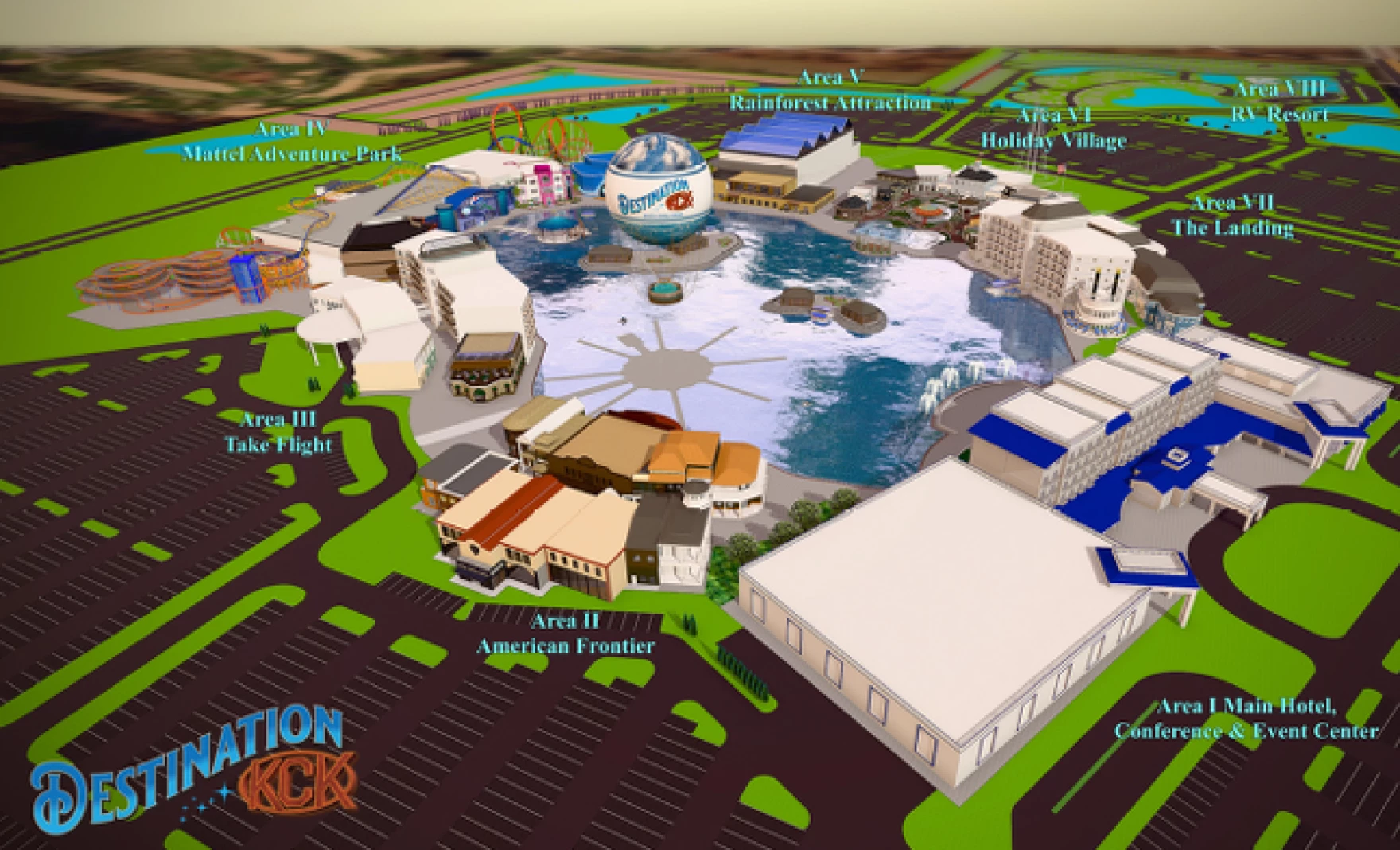
Kansas is getting a new attraction, and it’s certainly colorful. We’re talking about the planned Mattel Adventure Park in Bonner Springs. Think Barbie’s Dream House, Hot Wheels rollercoasters, even an indoor rainforest. It’s a huge project, estimated at $540 million, and it promises a lot of fun for families, tourists, and, of course, the people who love their toys.
City officials in Bonner Springs are pretty excited. They’ve signed off on a massive tax incentive package to get this thing built. We’re talking about potentially doubling the city’s taxable property value. That could mean a lot of property tax relief for residents, which, let’s be honest, sounds good to just about anyone. Developers are banking on this park bringing in around $190 million in revenue annually. It’s supposed to open its doors in 2031, right around when the Kansas City Chiefs might be setting up their new stadium nearby. The whole area already has a bunch of entertainment options, like The Legends shopping mall, the Kansas Speedway, and a soccer stadium. So, in theory, this Mattel park just fits right in, boosting the local economy and keeping Bonner Springs’ small-town charm intact while bringing in big money from the outside.
But here’s where the picture gets a bit less rosy, or perhaps, less pink, if you will. This whole deal is powered by something called STAR bonds. These aren’t just handouts. They’re loans a city takes out, and then they’re paid back using the sales tax revenue generated by the project itself. So, the state and local sales taxes that would normally go into public coffers? They get diverted to pay off these bonds instead. State officials often say these bonds create new tax revenue, so it’s not using existing money. But the facts show a different story if you look closely.
Public finance expert Zach Mohr from the University of Kansas isn’t quite as optimistic. He points out that these projects commit the state to “lots and lots of money.” Bonner Springs, for example, pledged about $220 million to the theme park, with $175 million coming from these STAR bonds. The problem is, Kansas is already on the hook for hundreds of millions in similar STAR bond projects across the state. Mohr suggests we might be nearing a “tipping point.” If a project doesn’t perform as expected, or even fails, the bond investors might be out of luck, not the taxpayers directly, which sounds good on paper. But it also means future state sales tax revenue is tied up for years, effectively diverting funds that could be used elsewhere.
And there’s another angle to consider. A lot of these economic development models are based on people coming to the area and spending money there. But what happens when people visit, get inspired by, say, a Barbie Dream House, and then go home and buy the latest Barbie online? That means Kansas misses out on a chunk of the sales tax revenue that was supposed to help pay for the park. It’s a real risk, especially with how much shopping has moved online. So, while the idea of a vibrant new theme park is appealing, and the promise of property tax relief is compelling, the financial mechanics behind it are complex. They come with significant future commitments and a dose of uncertainty for the state’s finances. It’s not just about building a park; it’s about betting big on future spending, and sometimes, those bets don’t pay off as advertised.